Maryland Trek
with Justin Berk
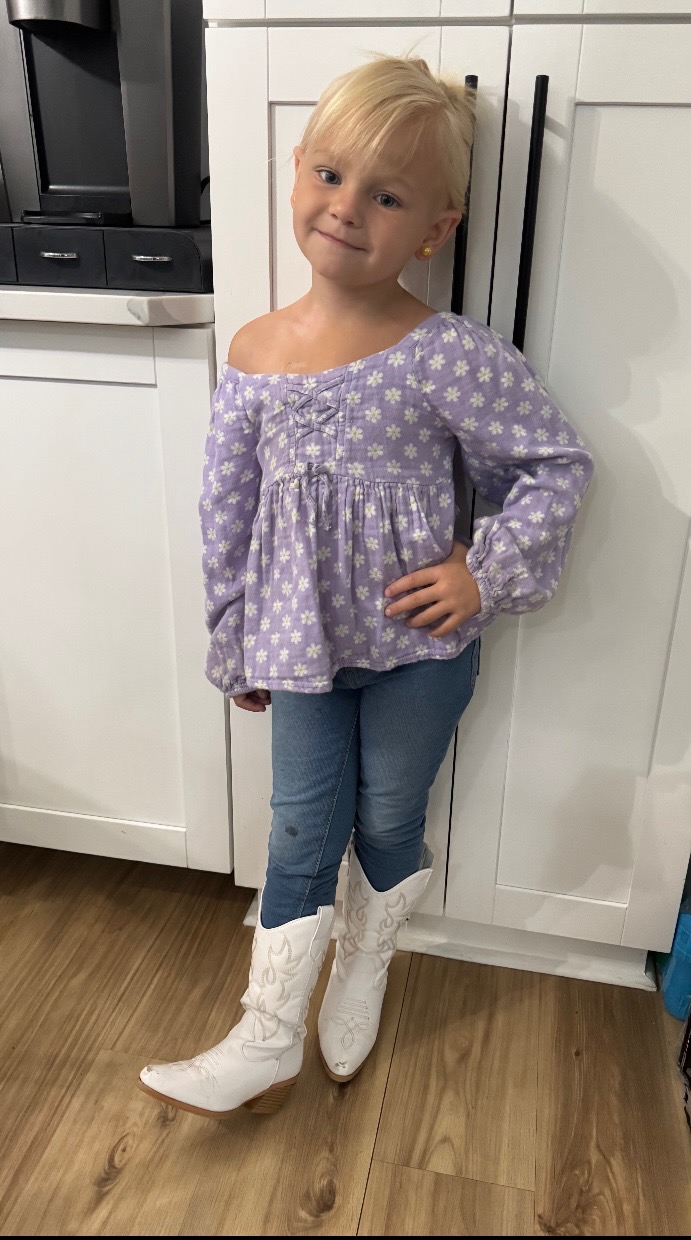
Age: 7
Type of Cancer: High-risk Neuroblastoma
Treatment Status: Cancer free; scans now once a year
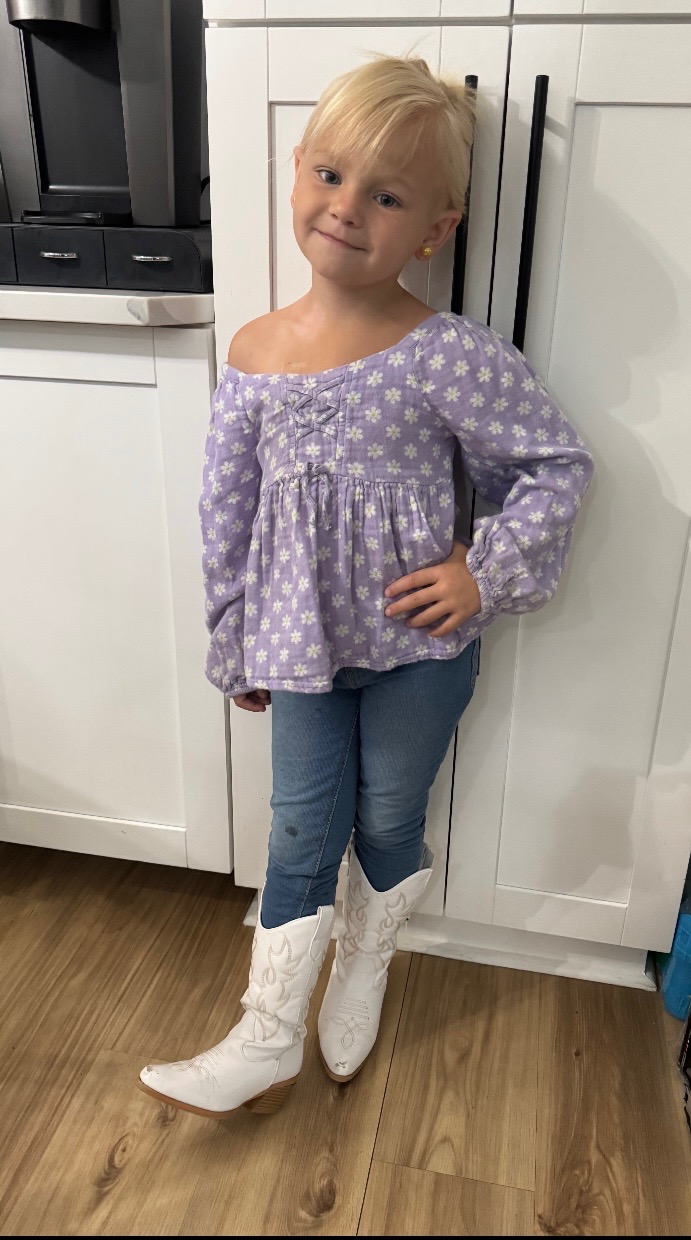
In January 2022, in the middle of potty training, two-and-a-half-year-old Madi had stomach troubles her mom just couldn't shake a bad feeling about. An ER visit called it a stomach bug, but her parents pushed for a CT scan—and the next day came the call that changed everything: pack a bag, Johns Hopkins oncology is waiting for you.
Madi had a paraspinal tumor the size of a large strawberry wrapped around her spine, and her bone marrow was completely filled with cancer cells. Because most children with neuroblastoma have no symptoms until the tumor is far larger, her parents were told that finding it so early was a rare gift—but the odds they were given were still 50/50 at best. Four days later, Madi started chemo, beginning 18 months of treatment: seven rounds of chemotherapy, thirteen rounds of proton therapy, immunotherapy, and a stem cell transplant using her own cells.
Then, a few rounds in, her doctor delivered news the family refused to believe: “I don't know if you're going to believe this, but the tumor is gone. We can't find it.” They made the team scan again. The tumor had responded better than her doctors had ever seen, and Madi was spared a high-risk surgery on her spine.
The victory came at a cost. A severe case of mucositis left scar tissue that permanently narrowed her esophagus, so Madi takes small, careful bites to this day. The chemo also took her high-frequency hearing—and Madi was so young that no one knew at first. Too little to tell anyone she couldn't hear, she quietly taught herself to read lips. Her family discovered it at a hearing appointment, when the doctor mouthed "Do you like ice cream?" without making a sound—and Madi answered, "I like ice cream." Today she wears hearing aids—the family calls them "her ears," and the current pair is pink and cheetah print. The chemo touched her learning too: when she came home with a New Year's resolution that read "to read better because I’m not good at it." Her mom cried—then called the oncology team, who had her evaluated at Kennedy Krieger within a month. This summer she's working with reading and speech tutors.
Her family walked through it all during the height of COVID, when only one parent could be with her at a time. Her brothers, Connor and Jordan, once went more than a month without seeing her. One Fourth of July, the family reunited to watch the fireworks together from the 11th floor of Hopkins. Connor, then eleven, quietly did his own research on his sister's diagnosis and read a book the hospital gave him called How to Be a Cancer Brother. The family found its motto in those months, and they still live by it: never turn down a memory.
Today Madi is thriving—full speed, as always. She just won a softball championship, and yes, she got a ring. Her scans are down to once a year. Her family carries the friends they made along the way, including Leanna, a fellow Pasadena girl and hospital-hallway neighbor, who is honored in memory on this year's Trek.
Just In Power Kids was there with parking support—sometimes $30 to $40 a day during long stays—hospital meals, and even a dads' day out on the bay. “The moms connect at a different level, and the dads sit in the background a lot,” her dad, Todd, said. “Just for dads to get out and be together—I thought that was really cool.”
A coach at heart, Todd shares the mindset that carried them: “Don't spend any time worried about why it happened to you. Every minute you spend worrying about why is a minute you could be spending on how to enjoy that moment and move forward. Be in love with the process. Fight your fight.”